Albania
 Argentina
 Australia
 Austria
 Belgium
 Bosnia and Herzegovina
 Brazil
 Bulgaria
 Canada
 Chile
 Colombia
 Croatia
 Czech Republic
 Denmark
 Estonia
 Finland
 France
 Germany
 Greece
 Hungary
 Ireland
 Italy
 Latvia
 Lithuania
 Luxembourg
 Mexico
 Moldova
 Montenegro
 Netherlands
 New Zealand
 North Macedonia
 Norway
 Philippines
 Poland
 Portugal
 Romania
 Serbia
 Slovakia
 Slovenia
 South Africa
 Spain
 Sweden
 Switzerland
 Turkey
 Ukraine
 United Kingdom
 United States of America



Audio Cables
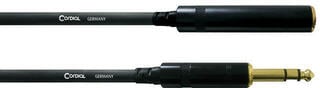
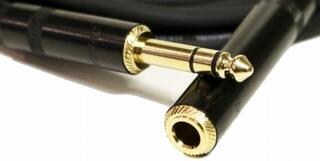
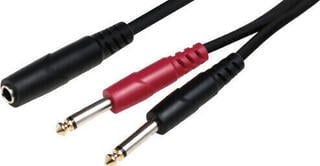
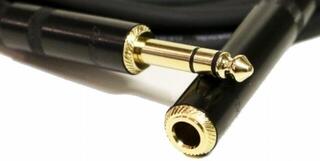
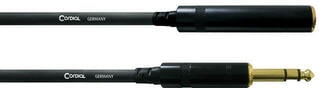
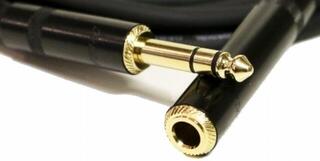
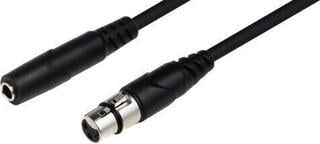
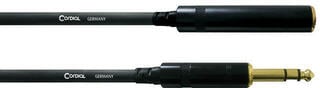
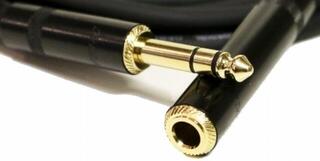
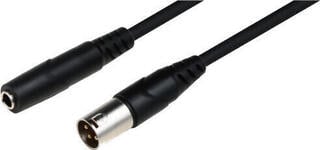
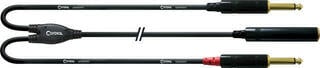
Ready-made audio cables connect instruments, mixing consoles, interfaces, speakers and other equipment, carrying an analogue signal between two connectors. They differ in connector type, length, shielding and construction. When choosing, always check which connectors both devices have and what you will use the cable for, because instrument, microphone and speaker cables are not the same.
Which cable for which use?
| Cable type | What it is used for | What to watch out for |
|---|---|---|
| Instrument cables | Connecting a guitar, bass or keyboard to an amplifier or pedal | Unbalanced signal, susceptible to interference over long distances |
| Microphone cables | Connecting a microphone to a console or interface | Balanced connection, XLR connectors |
| Patch cables | Connecting effects and equipment over short distances | Short length and low-profile connector |
| Speaker cables | Connecting an amplifier to speakers | The correct type, not an instrument cable; conductor cross-section |
| MIDI cables | Transmitting MIDI data between devices | This is not an audio signal |
What to look for when choosing
First determine which connectors you need: 6.3 mm jack, 3.5 mm jack, XLR, RCA or another type. Then choose a length with a little extra, not an unnecessarily long cable that tangles and may degrade the signal. Shielding and connector strength are also important if you frequently plug and unplug the cable. For live performance, look for a durable design; for studio work, focus on quality soldering and clean transmission.
Balanced and unbalanced connections
Balanced cables with XLR or TRS connectors suppress interference better over longer runs. Unbalanced connections are common with instruments and short cable runs. If you are carrying the signal over a long distance, for example from the stage to the console, choose a balanced solution.
- Check that the connectors are compatible with both devices.
- Consider the length and where the cable will be routed.
- With a cable that has become worn over time, check whether the signal cuts out when it moves.
- Keep different types of cables in your setup for different uses so you do not mix them up.
Cable care
Coil cables loosely in a circle, not around your elbow or at a sharp angle, to avoid damaging the shielding and conductors. Clean the connectors with a dry cloth and protect them from dust and moisture during storage. It is better to replace a damaged cable than risk signal dropouts while playing.
You can find a wider selection in the ready-made cables category. The range includes cables from Revoltage and Soundking, for example.