Albania
 Argentina
 Australia
 Austria
 Belgium
 Bosnia and Herzegovina
 Brazil
 Bulgaria
 Canada
 Chile
 Colombia
 Croatia
 Czech Republic
 Denmark
 Estonia
 Finland
 France
 Germany
 Greece
 Hungary
 Ireland
 Italy
 Latvia
 Lithuania
 Luxembourg
 Mexico
 Moldova
 Montenegro
 Netherlands
 New Zealand
 North Macedonia
 Norway
 Philippines
 Poland
 Portugal
 Romania
 Serbia
 Slovakia
 Slovenia
 South Africa
 Spain
 Sweden
 Switzerland
 Turkey
 Ukraine
 United Kingdom
 United States of America


Clarinets
Choose a clarinet according to its tuning, keywork system and your playing level. The Bb model is standard for tuition, wind bands and jazz; the A clarinet is used mainly in orchestral repertoire, while the bass clarinet fulfils a lower role. As a beginner, you primarily need airtight keywork, a suitable reed and a mouthpiece that does not create unnecessary resistance.
The material changes maintenance and behaviour
An ABS clarinet withstands school use and environmental changes well. A wooden instrument can offer a different response but is more sensitive to temperature, humidity and cracking; you need to play in a new instrument gradually. In a cold space, first allow it to acclimatise in its case.
The Boehm system and tuning must match the school's requirements
The keywork differs between systems, so follow your teacher's and textbook's recommendations. When testing it, play through the lower register, the transition across the register key and the upper notes. If some notes do not sound without excessive pressure, have the pads and joints checked.
Reed, mouthpiece and ligature
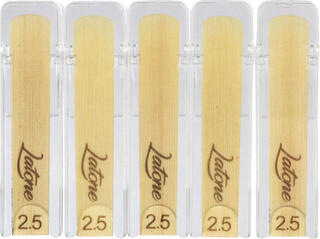
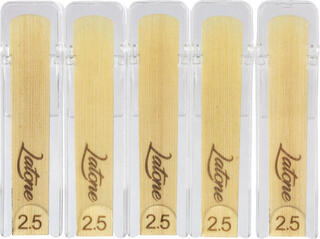
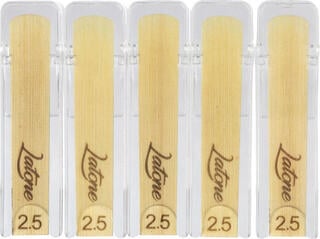
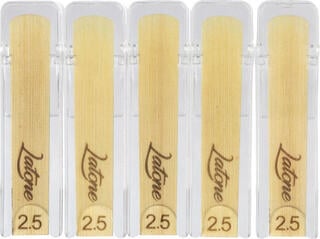
You need to assess these three parts together. A softer reed is easier to play in, but one that is too soft closes under stronger airflow; suitable mouthpieces differ in tip opening and facing length. After playing, remove the reed and let it dry flat.
Moisture must not remain in the instrument
Disassemble the sections without force, pull a swab through the body and lubricate the corks only with the designated grease. For additional aids, see wind instrument cleaning and maintenance. Do not scrub the pads with a wet cloth.
The case must protect the keys from pressure
Store the clarinet disassembled in the recesses intended for each section. The mouthpiece and reeds belong in a separate ventilated compartment. When assembling it, do not press on the long keys; twist the sections by their solid parts and align the bridge keys without force.
Start with the tuning and system required by your teacher; then check that the keys seal properly and that the mouthpiece and reed are suitably matched.

Clarinets for beginners

Deals & Coupons: Clarinets

How to learn to play the clarinet

How to choose a clarinet
Unboxed: Clarinets

Bb Clarinets

A and ES Clarinets

Professional clarinets

Clarinet Ligatures

Clarinet Mouthpieces

Clarinet Reeds

Sheet music for wind instruments

Cleaning and Maintenance for Brass

Clarinet Bags and Cases