Albania
 Argentina
 Australia
 Austria
 Belgium
 Bosnia and Herzegovina
 Brazil
 Bulgaria
 Canada
 Chile
 Colombia
 Croatia
 Czech Republic
 Denmark
 Estonia
 Finland
 France
 Germany
 Greece
 Hungary
 Ireland
 Italy
 Latvia
 Lithuania
 Luxembourg
 Mexico
 Moldova
 Montenegro
 Netherlands
 New Zealand
 North Macedonia
 Norway
 Philippines
 Poland
 Portugal
 Romania
 Serbia
 Slovakia
 Slovenia
 South Africa
 Spain
 Sweden
 Switzerland
 Turkey
 Ukraine
 United Kingdom
 United States of America


Loudspeakers
PA speakers turn an amplified electrical signal into sound for concerts, rehearsal rooms, spoken-word events and permanent installations. Start by considering the size and layout of the space, the volume you need, transport requirements and whether you already have a suitable amplifier. Then compare cabinet designs, inputs, rigging or mounting options and weight. A well-designed sound system should deliver clear, balanced sound to the audience, rather than simply the highest possible volume.
Active or passive speakers
The first choice is straightforward: the amplifier can be inside the cabinet or separate from it. Active speakers have an amplifier built into the enclosure, so you connect an audio signal and electrical power. This is useful for mobile sound systems, quick setup and situations where you do not want to choose a separate power amplifier. Check the number and type of inputs, options for connecting another speaker and the available signal processing controls.
Passive speakers need an external power amplifier. They offer more flexibility when designing a system or replacing its components, but the amplifier must suit the speakers' impedance and power handling. Include the amplifier, cables and any power distribution unit in your budget and transport plans. Do not confuse speaker cable with instrument or microphone cable.
| Solution | What it offers | What to allow for | Typical use |
|---|---|---|---|
| Active speaker | The amplifier is already built into the cabinet | Each speaker needs power | Mobile band, DJ, presenting |
| Passive speaker | Separate speaker and amplifier | The system must be correctly matched | Permanent installation, expandable system |
| Column system | A slim system that is easy to position | Check coverage and the bass output you need | Smaller stages, presentations, acoustic performances |
| Line array | Multiple elements provide controlled coverage | Requires system design, safe rigging and adjustment | Larger spaces with professional sound reinforcement |
A system to suit the job
Main sound reinforcement for music and speech
A pair of main speakers may be enough for a small hall, but the number of units alone does not determine the result. The audience should be within the coverage area, and speakers should not point directly at nearby walls or corners. For speech, prioritise intelligibility and even coverage. Bands and DJs also need to allow for greater demands on low frequencies and system headroom.
If you would rather not choose every component separately, consider a complete PA system. Even with a package, check what is actually included: the name alone does not confirm that it contains a mixer, microphone, stands or cables. A modular system, on the other hand, is easier to tailor precisely to your inputs and working methods.
Bass reinforcement and monitoring
A full-range speaker handles a large part of the audible spectrum, but a subwoofer can help with music that has a strong low end. It takes over the low frequencies, allowing the main speakers to focus on the rest of the spectrum. Correct crossover settings, polarity and placement matter; adding a bass cabinet at random will not necessarily produce a more balanced sound.
A stage monitor directs sound towards the performer rather than the audience. When choosing one, consider the cabinet shape, control positions and the risk of feedback with microphones. A separate monitor mix gives musicians more control, but requires enough outputs on the mixing desk.
Portable and permanent solutions
A battery-powered speaker or portable system helps where there is no power socket or equipment needs to be moved frequently. Check the charging method, inputs and actual weight of the complete system. The term “wireless” may refer only to signal transmission; it does not automatically mean operation without a power cable. A speaker with a microphone can be practical for presentations or leading training sessions, but always confirm the package contents in the specifications.
Permanent installations require particular attention to mounting points, cable routing, appearance and safety. Ceiling and outdoor models serve a different purpose from stage speakers. Outdoor use requires manufacturer-confirmed protection suitable for the environment; a sturdy cabinet alone is no proof of rain resistance.
Specifications that work together
- Driver size and design: affect the speaker's character and dimensions, but a larger diameter does not automatically mean better results.
- Maximum sound pressure level and sensitivity: help you assess usable volume. Compare figures only when the manufacturer uses the same measurement method.
- Frequency range: read it alongside the measurement tolerance and intended use. The extreme figures alone do not tell you how evenly a speaker reproduces sound.
- Dispersion: horizontal and vertical coverage angles determine where sound energy travels. With a rotatable horn, check the correct orientation.
- Connectors and signal processing: determine how you connect a microphone, mixer or another speaker. Digital presets cannot replace suitable placement.
- Dimensions and weight: matter when loading, carrying equipment up stairs and storing it.
Placement, stands and safe operation
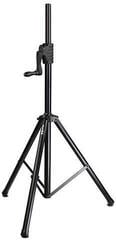
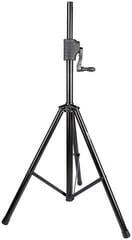
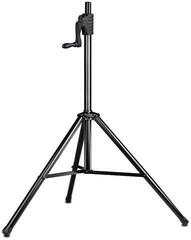
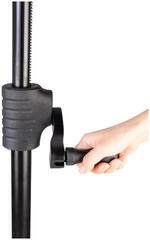
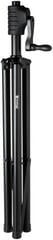
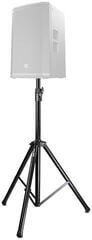
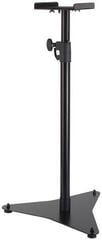
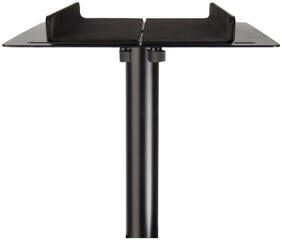
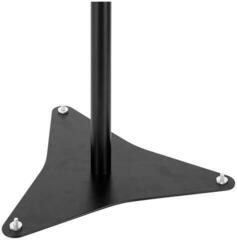
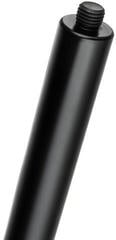
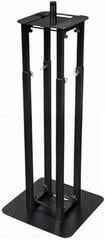
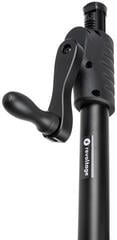
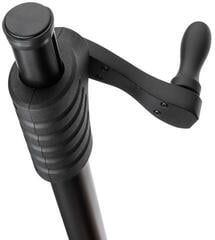
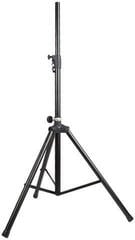
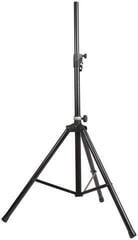
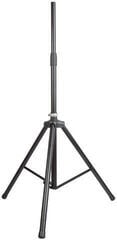
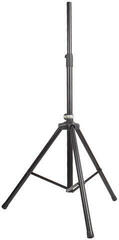
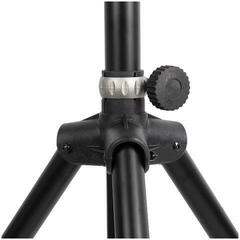
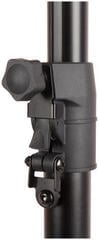
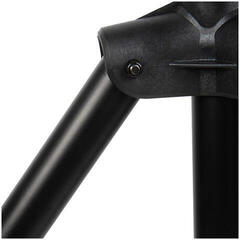
The high-frequency driver of a main speaker is usually positioned above the heads of the front rows so the audience does not block the sound. You can use speaker stands, distance poles or manufacturer-approved rigging points. Always observe load limits, mounting socket diameter and locking requirements, and use level ground. Route cables so nobody can trip over them, and secure the system against tipping.
A fitted cover or case helps during transport, protecting the controls, grille and cabinet finish. Choose replacement loudspeakers, high-frequency drivers and other parts by exact compatibility, rather than diameter alone. Incorrect replacement can change the speaker's electrical and acoustic characteristics. During operation, watch the limiter warning indicators and do not increase the volume if the system is already clearly distorting.
Practical steps before ordering
- List the number of microphones, instruments and playback devices, along with the outputs you need.
- Draw the space, audience position and places where equipment can be set up safely.
- Choose between an active and passive system and check that all components are compatible.
- Allow for stands, signal and power cables, covers and safe power distribution.
- Compare the weight of each transportable item with what you can regularly load and carry.
- Leave spare inputs and outputs if the system will be expanded.
For occasional presenting, a lightweight system that connects quickly makes sense. A regularly gigging band is more likely to value serviceability, durable connectors and predictable connections to the mixer and monitors. For a large hall or a flown system, design and installation should be handled by an experienced sound engineer and a qualified installer.
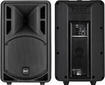
Deals & Coupons: Loudspeakers
Unboxed: Loudspeakers
Bundles: Loudspeakers

Active Loudspeaker

Passive Loudspeakers

Complete PA systems

Subwoofers

Line Array Systems

Battery Powered Speaker Systems

Speakers with microphone

Loudspeaker Stands

Column Sound Systems
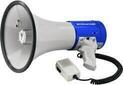
Megaphones

Wireless and portable speakers
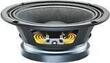
Loudspeakers components

Bags and Cases for Speakers and Subwoofers