 Albania
 Argentina
 Australia
 Austria
 Belgium
 Bosnia and Herzegovina
 Brazil
 Bulgaria
 Canada
 Chile
 Colombia
 Croatia
 Czech Republic
 Denmark
 Estonia
 Finland
 France
 Germany
 Greece
 Hungary
 Ireland
 Italy
 Latvia
 Lithuania
 Luxembourg
 Mexico
 Moldova
 Montenegro
 Netherlands
 New Zealand
 North Macedonia
 Norway
 Philippines
 Poland
 Portugal
 Romania
 Serbia
 Slovakia
 Slovenia
 South Africa
 Spain
 Sweden
 Switzerland
 Turkey
 Ukraine
 United Kingdom
 United States of America


Winds
Wind instruments are united by their use of airflow, but they produce sound in three different ways: across an edge, through the vibration of a reed, or through the vibration of your lips in a mouthpiece. This difference determines your embouchure, maintenance and the speed of your initial progress. You should therefore use the category as a guide to sound families, not as a single interchangeable group of instruments.
Air across an edge: flute instruments
On a recorder, a channel directs the air, while a transverse flute requires a precise lip angle. You can produce your first notes on a recorder more quickly, but accurate intonation still depends on your breath and how you cover the holes. Choose the material and size according to your school, range and hand reach.
Single or double reed
The clarinet and saxophone use a single reed attached to the mouthpiece. The oboe and bassoon use a double reed and require more sensitive preparation. In both groups, reeds are consumable items; the wrong strength can make developing your embouchure more difficult as a beginner.
Brass instruments set your lips vibrating
On trumpets, cornets and flugelhorns, sound is produced by your lips vibrating in the mouthpiece. The trombone changes its length with a slide, while other brass instruments most commonly use valves. The mouthpiece size, instrument resistance and weight must suit both you and your ensemble.
Choosing an instrument for your first studies
Start with your teacher's recommendation and the availability of tuition. A smaller instrument is not always easier for developing the correct embouchure, and a large instrument may be ergonomically inaccessible. Include a case, consumable items and mechanism servicing in your costs.
Maintenance cannot be generalised into a single kit
Do not soak a wooden body, rinse metal tubing according to the instructions, and do not leave pads wet. After every playing session, remove condensation in the way appropriate for the specific instrument.
Your age affects ergonomics, not musical value
A child can start with a curved head joint on a transverse flute, a smaller French horn or another solution recommended by a teacher. A plastic version of a brass instrument reduces the weight but changes the response. Your choice should allow healthy posture and regular practice.
Plan consumable items in advance
Reeds wear out, cork grease and valve oil run out, and swabs need to be washed or replaced. An instrument without available consumable items may become unusable just before a rehearsal. For a less common type, check the dimensions of the reed assembly, reeds and mouthpiece before buying.
First choose how you want to produce the sound and the musical setting, then continue to a specific family with a suitable size and accessories.
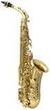
Woodwind instruments for beginners
Deals Wind Instruments

Bundles: Winds

Recorders

Transverse Flutes

Saxophones

Trumpets, Cornets and Flugelhorns

Clarinets

Trombones

Tubas and Sousaphones

Euphonia

Horns

Bassoons

Oboes

Tenor and Baritone Horns

Hunting Horns

Wind Synthesizers

Other Wind Instruments

Mouth Harmonicas
Melodicas

Effect Whistles

Cultural whistles
Didgeridoo

Pan Flutes

Ocarinas

Kazoos
Jaw Harp

Mutes and Silent Brass Systems

Mouthpieces for Woodwind Instruments

Mouthpieces for Brass

Reeds for Woodwinds

Bags for Wind Instruments

Cleaning and Maintenance for Brass

Straps for Brass and Woodwind

Music Stands

Sheet music for wind instruments

Accessories for Wind Instruments


