 Albania
 Argentina
 Australia
 Austria
 Belgium
 Bosnia and Herzegovina
 Brazil
 Bulgaria
 Canada
 Chile
 Colombia
 Croatia
 Czech Republic
 Denmark
 Estonia
 Finland
 France
 Germany
 Greece
 Hungary
 Ireland
 Italy
 Latvia
 Lithuania
 Luxembourg
 Mexico
 Moldova
 Montenegro
 Netherlands
 New Zealand
 North Macedonia
 Norway
 Philippines
 Poland
 Portugal
 Romania
 Serbia
 Slovakia
 Slovenia
 South Africa
 Spain
 Sweden
 Switzerland
 Turkey
 Ukraine
 United Kingdom
 United States of America


Strings
Bowed string instruments form a family ranging from the violin to the double bass, but size is not the only difference. Each member has its own tuning, playing position, notation and role in an ensemble. This category serves as a guide to help you find an instrument with a suitable register and playing position.
The violin carries the highest voice
You hold the violin on your shoulder, and its size is selected according to your reach when learning. Its register and broad repertoire make it a common first bowed string instrument. A beginner's set is worthwhile only if the instrument is set up correctly and the bow matches its size.
The viola adds a C string and a larger body
The viola sounds lower and often uses the alto clef. Its dimensions are not given using the same fractions as for violins, so you need to try both the body length and scale length. A larger model must not force your elbow and wrist into a tense position.
The cello rests on the floor
The cello stands on an endpin and you play it while seated. You need to check the correct size together with the chair, endpin height and your reach into first position. For transport, it needs a cover or rigid case that does not press on the bridge.
The 3/4 designation alone does not determine your choice of double bass
For a double bass, consider the actual scale length, rib height and playing style. Adults often use a 3/4 model because a 4/4 can require an unnecessarily long reach. Jazz pizzicato and orchestral bowing may require different strings and setups.
There are limits to shared care practices
After playing, wipe rosin from the varnish and strings, loosen the bow and protect the instrument from sudden changes in humidity. Do not adjust the bridge, sound post or glued joints at home. Always choose parts, strings and case size for the exact instrument.
Your teacher and repairer are part of the choice
Before buying, check the availability of a teacher for the particular instrument and a specialist who can set it up. Bowed-string technique is only partially transferable; changing size alters your posture, music reading and physical strain.
Start with the playing position and register you want to play, then ask your teacher to confirm the size of the specific instrument.
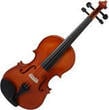
String instruments for beginners
Deals Bowed string instruments

Unboxed: Strings
Bundles: Strings

Violins

Violas

Cellos

Double Basses

Electric Violins

Electric Violas

Electric Cellos

Electric Double Basses

Accessories for Violins

Accessories for Violas

Accessories for Cellos

Accessories for Double Bass

Bow bags and cases

String instrument Pickups

Fine tuning

Spare parts and other accessories

Music Stands and Accessories

Sheet music for strings


