Albania
 Argentina
 Australia
 Austria
 Belgium
 Bosnia and Herzegovina
 Brazil
 Bulgaria
 Canada
 Chile
 Colombia
 Croatia
 Czech Republic
 Denmark
 Estonia
 Finland
 France
 Germany
 Greece
 Hungary
 Ireland
 Italy
 Latvia
 Lithuania
 Luxembourg
 Mexico
 Moldova
 Montenegro
 Netherlands
 New Zealand
 North Macedonia
 Norway
 Philippines
 Poland
 Portugal
 Romania
 Serbia
 Slovakia
 Slovenia
 South Africa
 Spain
 Sweden
 Switzerland
 Turkey
 Ukraine
 United Kingdom
 United States of America


Gigbags, Covers and Accessories for PA
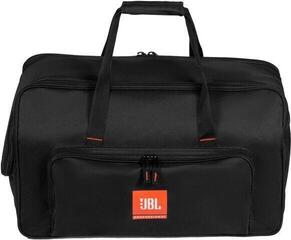
Cases and accessories for audio equipment protect devices during transport, storage and everyday operation. A loudspeaker cabinet carried in your own car requires a different level of protection from a mixing console that frequently travels with other stage equipment. When choosing, compare the internal dimensions, construction, carrying method and access to connectors or handles. The case must suit both the specific device and the route you regularly travel with it.
Soft case, hard case or protective cover?
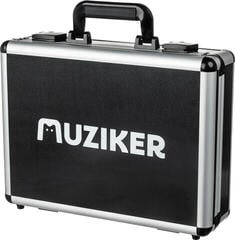
A soft bag mainly protects against dust, scratches and minor impacts and is usually easier to carry and store. A hard case separates the device more effectively from the rest of the load, but adds weight and takes up space even after unloading. A simple cover is suitable for equipment that remains set up and needs protection between events. A rack case is intended for equipment with a corresponding mounting format and allows it to be transported as a connected unit.
| Solution | Suitable situation | Check before purchase |
|---|---|---|
| Soft case or bag | Transport in your own vehicle, storage, lighter equipment | Padding, zips, seams, straps and internal dimensions |
| Hard case | Frequent loading with other equipment | Material, hardware, closures, handles and weight |
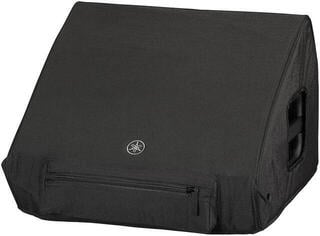
| Dust cover | The device remains on a stand or table | Shape, coverage of controls and ease of fitting |
| Rack case | Processors, receivers or amplifiers designed for rack mounting | Number of rack units, mounting depth and space for cables |
| Case for stands and cables | Separating long or small components | Length, dividers, load capacity and content labelling |
Dimensions: the device name is not enough
Compare the internal dimensions of the case with the dimensions of the equipment, not just the external measurements. Account for feet, handles, protruding controls, fitted caps and any space needed for padding. A case that is too tight puts pressure on the controls and is difficult to close; one that is too large allows the device to move whenever you brake. For a form-fitting case, verify the exact compatibility specified by the manufacturer.
Loudspeaker cabinets and subwoofers
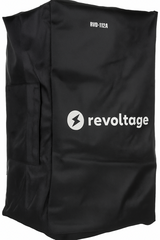
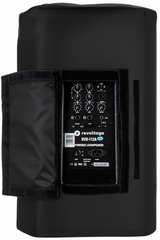
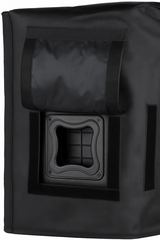
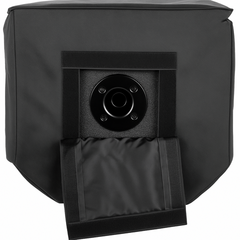
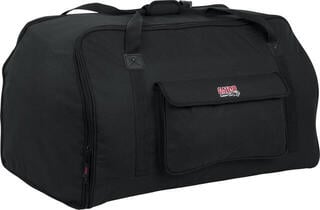
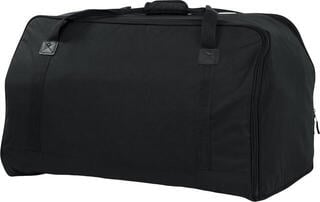
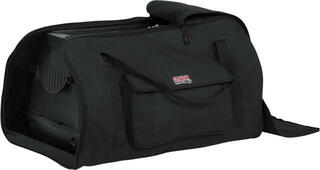
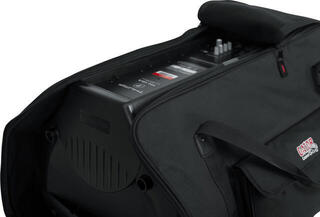
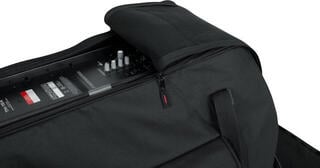
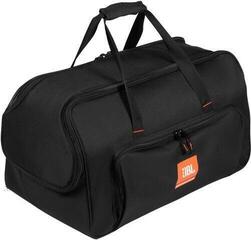
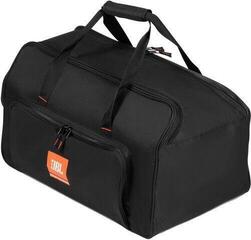
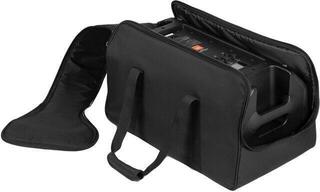
For a loudspeaker, it is important that the case allows you to use the built-in handles and can be fitted without placing the heavy cabinet on a sensitive side. Openings or removable sections are useful exactly where you grip the handles when carrying it. Choose loudspeaker bags according to the cabinet's exact dimensions and shape. A cover protects the surface, but it is not a substitute for a hard case when transporting the speaker among heavy cargo.
Mixing consoles and tabletop equipment
A mixing console often has sensitive faders, connectors and controls on its top surface. The case must therefore not transfer pressure directly onto them, and an appropriate protective clearance must remain inside the case. When choosing cases and bags for mixing consoles, also consider the power supply, side sections and cabling you want to transport with the console. If the case is also intended for use during operation, check access to the connectors and ventilation.
Microphones, stands and small components
It is safer to separate multiple microphones with dividers or form-fitting padding so that they do not strike one another during transport. Store stands without loose moving screws and collapse them according to the instructions before placing them in the bag. Bags for loudspeaker stands are designed for speaker stands; when choosing, check the length of the folded stand and the number of stands accommodated by one bag. Do not place heavy bases in a thin bag together with more delicate poles.
How to assess the level of protection
A thick wall alone does not indicate how a case will behave when dropped. Look for reinforced corners, seam quality, strap attachment, padding and whether the interior holds the device securely in place. A hard case needs reliable hardware and latches that will not open by themselves during handling. Wheels help in corridors and on ramps, but only add weight on stairs. Review the route from the storage area to the stage in advance.
- For short moves, primarily protect surfaces, controls and connectors.
- When loading frequently, separate sensitive devices from stands and metal components.
- During storage, protect equipment from dust, moisture and pressure from other cargo.
- At public events, label every item and keep a simple inventory.
- If another person handles the transport, use a closable and clearly labelled case.
Weight and handling are part of the selection process
Add together the weight of the empty case, the device and its accessories. One large case takes up fewer separate spaces, but it may be more difficult to load into a van than two smaller units. Handles should be positioned so that the load can be held close to the body, and a shoulder strap needs both a secure attachment and adjustable length. For a larger system, standardise the opening direction and labelling so that you do not have to search for the correct side on a dark stage.
Cables and accessories without tangled bundles
Cables should not be left loose between devices. Coil each one without sharp bends, secure it with a reusable strap and label its length and type. Separate compartments prevent connectors from scratching a display or control panel. Assign adapters, converter plugs and power supplies to a specific device; this allows you to see immediately during unloading whether anything is missing.
Rack processors may remain connected only if the cables have enough space inside the closed case and the connectors are not under strain. Place heavier components lower down and maintain ventilation around amplifiers or other devices according to the manufacturer's instructions. Do not leave fragile adapters plugged in during transport. Something that saves a minute during connection can damage the socket in an impact.
Routine before travelling and after returning
- Disconnect the power, prepare the device safely for transport and check for loose components.
- Place the equipment in its designated case and add padding only in spaces for which the padding is designed.
- Close all zips or latches and make sure the straps are not twisted.
- Load heavy cases at the bottom, but do not stack cargo beyond the permitted load of the case or device.
- After returning, check for moisture, dirt and damage to seams, wheels or hardware.
Clean the case regularly according to its material and let it dry before storage. Repair a damaged zip, torn seam or loose handle before placing equipment inside again. Create a consistent labelling system for the entire system: device name, destination and number of components. The case material is only one part of the protection. It is equally important to pack and load the equipment in the same way every time. A standardised procedure is especially useful when several people pack the equipment and every item must end up in the correct place.