Albania
 Argentina
 Australia
 Austria
 Belgium
 Bosnia and Herzegovina
 Brazil
 Bulgaria
 Canada
 Chile
 Colombia
 Croatia
 Czech Republic
 Denmark
 Estonia
 Finland
 France
 Germany
 Greece
 Hungary
 Ireland
 Italy
 Latvia
 Lithuania
 Luxembourg
 Mexico
 Moldova
 Montenegro
 Netherlands
 New Zealand
 North Macedonia
 Norway
 Philippines
 Poland
 Portugal
 Romania
 Serbia
 Slovakia
 Slovenia
 South Africa
 Spain
 Sweden
 Switzerland
 Turkey
 Ukraine
 United Kingdom
 United States of America


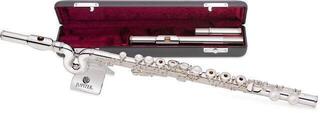
Transverse Flutes
With a transverse flute, your comfort is influenced by the type of keys, the position of the G key, the shape of the headjoint and the design of the footjoint. A student model should make it easier for you to produce your first clear note and should seal reliably, rather than overwhelm you with features. As an advanced flautist, you can specifically consider open-hole keys, a B footjoint or the headjoint material.
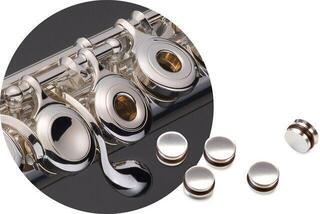
Closed-hole and open-hole keys
Closed-hole keys are more forgiving of less precise finger placement and are often chosen when you are starting out. Open-hole keys give you more options for advanced techniques, but require precise covering; temporary plugs can make the transition easier. An offset G reduces the reach required by your left hand, while an inline G suits different ergonomics.
C or B footjoint
A C footjoint is lighter and covers normal school requirements. A B footjoint extends the lower range by a B and adds weight, so it makes sense for repertoire that uses it. The smaller piccolo is not a substitute for a transverse flute; it is a separate, higher voice.
Material and level of servicing
A silver-plated student instrument is easier to maintain than a professional model made entirely of silver. With concert flutes, you also assess the headjoint, mechanism and individual response. Regardless of price, the pads must seal and the keys must operate without lateral play.
Cleaning without damaging the pads
After playing, remove moisture using a cleaning rod with a soft cloth. Wipe the surface with a dry cloth and do not soak the pads. Assemble the flute by holding the solid parts of the body rather than the keys, and only put it in its case after drying it.
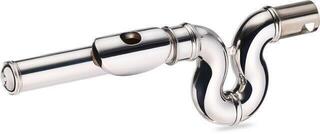
A children's headjoint can shorten the reach
A curved headjoint brings the keys closer to a smaller player and helps you keep your shoulders relaxed. However, it changes the balance, so you should adjust it with your teacher. Once you have grown, you can switch to a straight headjoint if the flute body and set offer this option.
Compare your reach to the G key, the weight of the footjoint and the seal of the mechanism; choose the features according to your repertoire, not the number of functions.