Albania
 Argentina
 Australia
 Austria
 Belgium
 Bosnia and Herzegovina
 Brazil
 Bulgaria
 Canada
 Chile
 Colombia
 Croatia
 Czech Republic
 Denmark
 Estonia
 Finland
 France
 Germany
 Greece
 Hungary
 Ireland
 Italy
 Latvia
 Lithuania
 Luxembourg
 Mexico
 Moldova
 Montenegro
 Netherlands
 New Zealand
 North Macedonia
 Norway
 Philippines
 Poland
 Portugal
 Romania
 Serbia
 Slovakia
 Slovenia
 South Africa
 Spain
 Sweden
 Switzerland
 Turkey
 Ukraine
 United Kingdom
 United States of America



Loudspeaker Cables
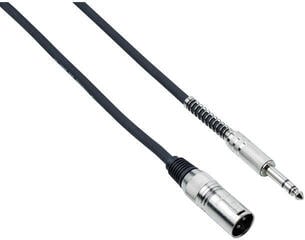
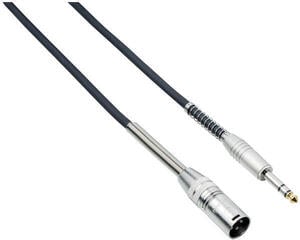
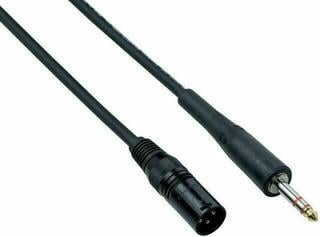
A speaker cable carries a power signal from an amplifier to a speaker cabinet, so its construction differs from an instrument or microphone cable. It does not have shielding designed for low-level signals, but sufficiently thick conductors that can handle higher current. When choosing, focus mainly on length, conductor cross-section and the connectors at both ends to ensure they fit both your amplifier and speaker cabinet.
Do not use an instrument cable instead of a speaker cable
They may look similar on the outside, especially when they have the same jack connectors, but an instrument cable is designed for a low-level signal. On a power output, it may be too thin, overheat and reduce transmission quality. If you need to connect a guitar and pedal, choose instrument cables; a speaker cable belongs between the amplifier output and speaker cabinet. Audio cables carry signals between studio equipment.
Length, cross-section and connectors
| Parameter | What to check |
|---|---|
| Length | The range includes shorter models of around one metre as well as long cables of up to fifteen metres or more; choose the length according to the distance, without unnecessary extra slack, because cable resistance increases with length |
| Conductor cross-section | A thicker conductor handles higher power and longer runs better; compare the manufacturer's specifications |
| Connectors | Most commonly TS jack, while Speakon is also often used; check which sockets your amplifier and speaker cabinet have |
| Use | A durable design is useful on stage and in the rehearsal room, while fixed installations primarily require the right cross-section and length |
What to check before choosing
- Which connector type the amplifier and speaker cabinet have.
- Which cable length suits you without unnecessary extra slack.
- Whether the cable is designed for a speaker output, not an instrument signal.
- The conductor cross-section for the power and distance.
- The durability of the jacket if you frequently coil and transport the cable.
For long runs, also consider handling. A cable that is too stiff is difficult to coil and more likely to become damaged, so choose a more flexible jacket if you will transport it frequently. For fixed installations, focus on the durability of the insulation and the routing method.
You can find a wider selection in the ready-made cables category. If you need several signal lines in one, take a look at multicore cables, and if you are looking for a cable with another purpose, browse other cables.