Albania
 Argentina
 Australia
 Austria
 Belgium
 Bosnia and Herzegovina
 Brazil
 Bulgaria
 Canada
 Chile
 Colombia
 Croatia
 Czech Republic
 Denmark
 Estonia
 Finland
 France
 Germany
 Greece
 Hungary
 Ireland
 Italy
 Latvia
 Lithuania
 Luxembourg
 Mexico
 Moldova
 Montenegro
 Netherlands
 New Zealand
 North Macedonia
 Norway
 Philippines
 Poland
 Portugal
 Romania
 Serbia
 Slovakia
 Slovenia
 South Africa
 Spain
 Sweden
 Switzerland
 Turkey
 Ukraine
 United Kingdom
 United States of America


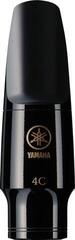
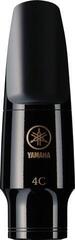
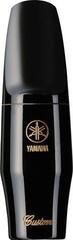
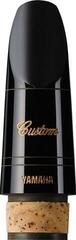
Mouthpieces for Woodwind Instruments
The mouthpiece is the interface between you, the reed and the instrument, so it must fit both the exact family and the specific type. Clarinet, alto, tenor and baritone mouthpieces are not interchangeable. When choosing, consider the shank, tip opening, facing, chamber and the reed with which it will be used.
First identify the instrument and register
The dimensions of the cork and reed also differ within the saxophone family. The term “saxophone mouthpiece” is therefore not sufficient. If you are specifically looking for an alto mouthpiece, use the selection of alto saxophone mouthpieces.
The tip opening changes the resistance
A more open model usually requires a softer reed and greater breath control. A more closed student mouthpiece may be more stable when you are developing your first embouchure. Tip-opening numbers cannot be compared between manufacturers without a dimension chart.
The chamber and baffle shape the response
A high baffle can support a direct, bright character, while a larger chamber can provide a different tonal volume. The material is not the only cause of the difference. Test the mouthpiece on the same instrument with the same reed.
The ligature should hold the reed straight
An overly tight ligature can restrict vibration, while a loose one allows the reed to move. Check that the diameter is compatible and position it correctly below the reed’s filed section. After playing, wipe out the mouthpiece, remove the reed and do not leave the shank forced onto the cork.
Protect the rails and tip with a cap
Damage to the thin tip or an uneven facing will change both the response and the reed seal. Do not leave the mouthpiece loose among metal accessories, and do not sand down bite marks yourself.
Test at the same volume
A louder model may seem more convincing in a short test, but control at pianissimo, intonation and fatigue after extended playing are important. Record the same phrase from a distance and compare it without being influenced by your immediate visual impression.
Choose the mouthpiece according to the exact instrument and opening, then match the reed and ligature to it as a single system.